 GensetPedia
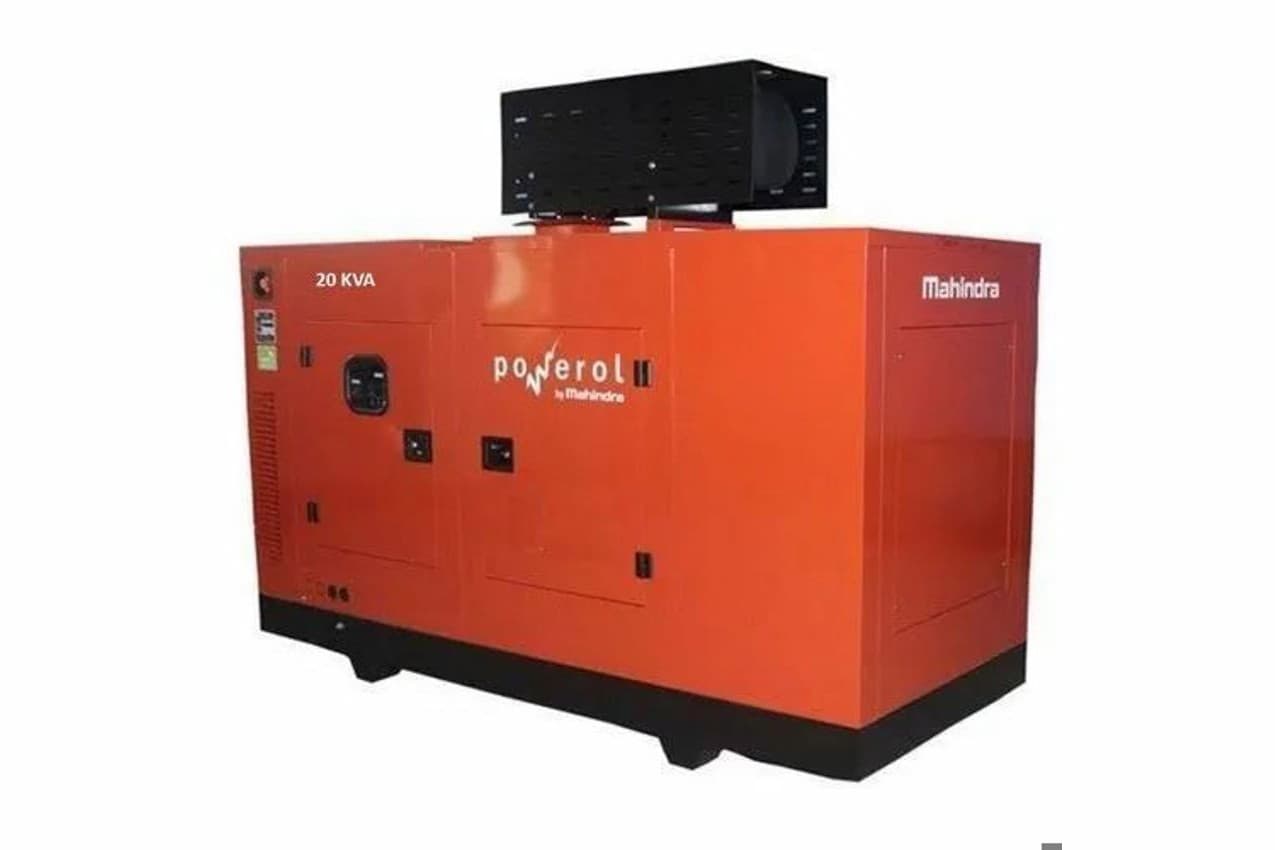
Sample record: 20 kVA Mahindra Powerol genset for a retail fuel station
Where the installer's name goes: Your company name here
The site on this page is not a real customer. GensetPedia’s technical desk wrote this record to show the format: the sections your submission is published under, and the depth that makes one genuinely useful to a buyer. The rating, the load and the reasoning are a worked example, not a measurement of anywhere real. Send us a real one and it is published under your company’s name.
The brief
The site is a roadside retail fuel outlet outside Fatehpur — dispensing points under a canopy, a small sales office, an air-and-water station for customers, and a tube-well for site water. Fatehpur district loses grid supply for long stretches through the summer, in blocks of hours rather than brief dips.
At a fuel station an outage does not merely inconvenience the site, it closes it. The dispensing units cannot draw fuel without power, so an outage means a forecourt that looks open and cannot sell, and a queue that drives on to the next pump. What the site needed was a set able to carry the whole forecourt at once — every dispensing point, the compressor, canopy lighting and the office — with enough headroom that one load starting would not disturb the rest.
How the size was arrived at
The connected load on a retail fuel outlet of this size falls in a fairly predictable band. The dispensing units and their pumps take the largest continuous share. Canopy lighting, the price display and signage add a steady kilowatt or two. The sales office contributes a split air-conditioner, lighting, a POS terminal, CCTV and the tank-gauge console. A tyre-inflation compressor and a water pump sit on top as intermittent motor loads. Together that typically lands somewhere between 12 and 15 kW connected, which at 0.8 power factor is a little under 20 kVA.
Two things push the answer to a 20 kVA set rather than the 15 kVA one immediately below it.
The first is duty. On paper this is a standby installation. In a district losing several hours of supply a day through summer, it is doing prime work. A set sized tight against its running load spends that time near its ceiling, in high ambient temperature, for hours at a stretch — and the dispensing pumps, the one load the site cannot afford to lose, are what suffer first when it cannot hold. Sizing to the running total alone is how a fuel station ends up with a genset that powers everything except the pumps.
The second is motor starting. The tyre-inflation compressor and the water pump are small, but they are direct-on-line induction motors that start on their own — whenever a customer pulls in for air, with no coordination with whatever else is drawing at that moment. A direct-on-line start pulls several times the motor's running current for a second or two. That surge lands on top of whatever the forecourt is already doing, and the set has to absorb it without the voltage dipping far enough to disturb the dispenser electronics standing beside it.
Taking the design peak as the busy-hour running load plus the largest single motor start, rather than the running load on its own, is what moves the answer past 15 kVA. A 20 kVA set then sits at roughly two-thirds to three-quarters of its rating in normal operation, which is where a diesel engine runs cleanest and most economically per litre.
Stepping up again to 22.5 kVA would have worked electrically, but it costs more to buy and would spend most of its life lightly loaded — and a diesel set run continuously well below its rating tends to wet-stack, glazing the bores with unburnt fuel and carbon. Twenty kilovolt-amperes is the honest fit for this load, and it leaves room for an additional dispensing point.
Where it sits, and why that matters
Genset placement on a fuel-retail site is a licensing matter, not a question of convenience. The set has to stand clear of the dispensing island and the underground tank vent pipes by the distance the site's PESO licence and its oil marketing company's engineering standard require, on a level pad, with the exhaust directed away from the forecourt and the vents.
Settle that position before delivery rather than finding it afterwards, and confirm the applicable clearance for any real site with the oil marketing company's engineer before a foundation is poured.
In service
A set sized this way carries the full forecourt load, so the station trades through an outage instead of shutting — which was the object of the exercise. Running hours are seasonal: heaviest through the summer months when outages are longest, comparatively light in winter.
On a set doing this much real work, a maintained log of hours run against fuel drawn is worth keeping, because it makes actual consumption checkable against the load carried rather than assumed from a brochure figure.
How this record was verified
This is a demonstration record, not a report of a real installation. GensetPedia's technical desk wrote it to show the format — the sections a submitted installation is published under, and the level of detail that makes one useful to somebody trying to size a set. No site was visited, no load was metered, no company is named, and no installer stands behind these figures. Nothing here has been verified because there is nothing to verify. Treat the reasoning as a method, not as a measurement of any particular forecourt. A real record looks the same but carries three things this one cannot: a named installer who stands behind it publicly, their own account of the site rather than the desk's, and a verification level earned from evidence we have actually seen.
Independent record — GensetPedia is not affiliated with, authorized by, or a reseller for any generator manufacturer.