 GensetPedia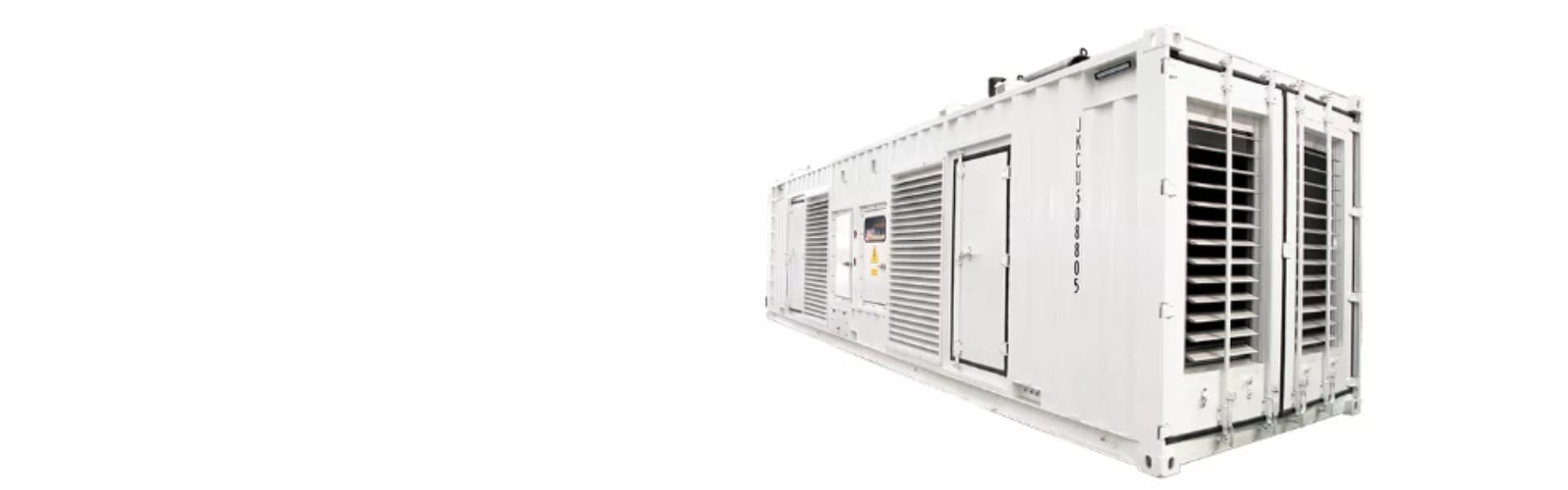
Open-Frame vs Silent (Acoustic) Genset: Which Do You Actually Need?
GensetPedia Technical Desk · · 7 min read
The take
Open-frame gensets are cheaper and easier to service, but an acoustic canopy isn't just a comfort upgrade — in residential-adjacent, rooftop, or society installations, local noise norms and RWA rules often make it a requirement rather than a choice. Check your site's actual constraints before treating canopy vs. open-frame as a pure cost decision.
Every spec page on GensetPedia shows a noise rating in dB(A), and it's one of the more skipped-past numbers on a data sheet — right up until a buyer installs an open-frame set somewhere it wasn't suited for.
What "open-frame" actually means
An open-frame genset is the engine, alternator, and control panel mounted on a base frame with no sound-attenuating enclosure — just a basic weather cover at most. It's the cheaper, lighter, easier-to-service configuration, and it's genuinely the right choice for a lot of installations: industrial sheds, factory floors, sites where ambient machinery noise is already high, and locations physically separated from occupied space.
What an acoustic canopy actually changes
- Noise. The headline reason to pay for one — a well-built acoustic canopy typically cuts noise by somewhere around 15-20 dB(A) at the same measuring distance, which is a substantial perceived difference given the logarithmic dB scale.
- Weather protection. A proper canopy is also a weatherproof enclosure, which matters for outdoor rooftop or open-yard installations regardless of the noise question.
- Price. Expect roughly a 15-25% premium over the equivalent open-frame model — check the price range on the specific model's page, since the delta varies by brand and kVA size.
- Footprint and weight. A canopied set is larger and heavier than the same engine open-frame, which matters if you're working with a tight rooftop or basement access constraint.
When it's a compliance question, not a preference
The decision stops being purely about budget in a few common scenarios:
- Residential-adjacent installations — rooftop, basement, or ground-floor placements near occupied flats or offices, where state pollution board ambient noise norms for residential zones typically apply.
- Housing societies and RWA-managed buildings, where the society's own bylaws frequently mandate acoustic enclosures regardless of what the state norm technically requires — worth checking your specific society's rules, not just the state minimum. (Our guide to sizing a genset for an apartment complex covers the sizing side of this same context.)
- Mixed-use commercial buildings with tenants who'll notice and complain — an open-frame set in a basement parking level under occupied office floors is a common source of post-installation disputes.
If your site falls into any of these, get the local norm and your building's own rules confirmed before ordering — undoing an open-frame purchase after a complaint is a far more expensive fix than paying the canopy premium upfront.
Where open-frame is still the right call
- A dedicated industrial shed with no residential neighbours and already-high ambient noise.
- A site with enough physical separation (distance, walls, existing structures) that noise dissipates below any relevant threshold before reaching occupied space.
- Budget-constrained installations where the owner has verified there's no regulatory or society requirement forcing the acoustic option.
The practical way to decide
Pull the noise rating (dB(A)) for the specific model and kVA you're considering from its spec page, check it against your local pollution board norm and any building/society rules, and price both configurations before committing. If you're unsure which applies to your site, a dealer who's installed in your area recently will know the local enforcement reality better than the norm document does — find one through our dealer directory.
Why it matters
Buying open-frame to save 15-25% on a set that's going into a residential basement or a rooftop next to neighbouring flats is a decision that tends to come back as a complaint, a compliance notice, or a forced retrofit — all more expensive than paying for the canopy upfront. The noise spec on every model page exists so this comparison can be made before purchase, not after the first test run wakes up a building.
Frequently asked questions
What's the difference between open-frame and silent (acoustic) generators?+
An open-frame genset has no sound-dampening enclosure and is cheaper and easier to service; a silent (acoustic) genset adds a sound-insulated canopy that cuts noise by roughly 15-20 dB(A), typically at a 15-25% price premium. The choice is often a compliance question, not just preference — residential-adjacent or rooftop installations frequently require the quieter option under local noise norms.
Is a silent/acoustic canopy legally required in India?+
It depends on the site, not a blanket national rule — state pollution control board norms and local municipal/society regulations around ambient noise near residential areas are what typically drive the requirement. Check your local norms and your housing society or building's own rules before assuming open-frame is acceptable.
How much noisier is an open-frame genset?+
Roughly 15-20 dB(A) louder at the same distance, which sounds like a small difference on paper but is a large difference to the ear — the dB(A) scale is logarithmic, so every 10 dB is roughly a perceived doubling of loudness.
Can you retrofit an acoustic canopy onto an open-frame set later?+
Sometimes, through a third-party enclosure fabricator, but it's rarely as clean an outcome as buying a factory-built acoustic version — fit, ventilation engineering, and warranty implications vary. It's usually cheaper and more reliable to decide upfront than to retrofit.
Found this useful?
Follow GensetPedia on LinkedIn for more genset buying guides and industry data.
Get the weekly digest
New buying guides and market data, once a week — no spam.