Buying Guides
kVA to kW: How to Convert a Genset Rating, With Chart

GensetPedia Technical Desk
· 8 min read
The take
To convert kVA to kW, multiply by the power factor: kW = kVA × PF. The Kirloskar, Cummins, Eicher and Jakson rating sheets we checked all use 0.8 lagging PF, so a 62.5 kVA set gives 50 kW and a 200 kVA set gives 160 kW. To go the other way, kW to kVA, divide by 0.8: a 40 kW load needs 50 kVA before margin. The engine's kW on a brochure is a different number (it is mechanical power at the flywheel), so always size from the electrical kWe.
Every diesel genset in India is sold in kVA. Almost every load you want to run, from a motor nameplate to an electricity bill, is stated in kW. kVA to kW is the conversion that joins the two, and it is one multiplication.
kW = kVA × power factor. For a genset rated at 0.8 power factor, kW = kVA × 0.8.
So a 25 kVA genset delivers 20 kW, a 62.5 kVA set delivers 50 kW, and a 200 kVA set delivers 160 kW. The rest of this guide explains where the 0.8 comes from, gives you a full kVA to kW chart and a kW to kVA chart, and shows the three places buyers go wrong.
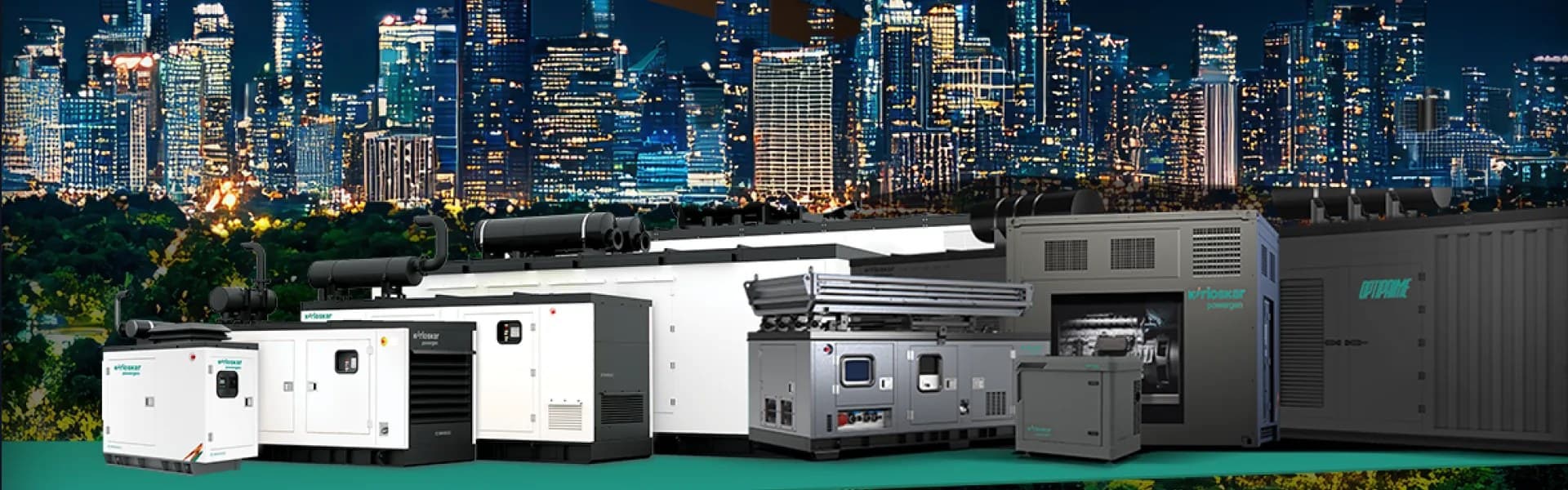
Photo: Kirloskar Oil Engines, from kirloskaroilengines.com.
kVA to kW and kW to kVA, both ways
Two units, one relationship:
| You have | You want | Formula | Example at 0.8 PF |
|---|---|---|---|
| kVA | kW | kW = kVA × PF | 125 kVA × 0.8 = 100 kW |
| kW | kVA | kVA = kW ÷ PF | 100 kW ÷ 0.8 = 125 kVA |
| kVA and kW | kVAR | kVAR = √(kVA² − kW²) | √(200² − 160²) = 120 kVAR |
kW is real power: the part that turns a pump, heats an element or lights a lamp. kVA is apparent power: what the alternator and cables actually have to carry. kVAR is reactive power, the part motors and transformers need to build their magnetic fields, which does no useful work but still flows through the windings. If you want the deeper version of that split, our piece on kW and kVAR sharing in genset synchronization covers how the engine governor handles kW and the AVR handles kVAR.
Where the 0.8 comes from
The 0.8 is not a rule of thumb. It is printed on the makers' own rating sheets:
- Kirloskar Oil Engines, 25–58.5 kVA and 200–625 kVA HD brochures: "Power Factor, lagging, 0.8", with the prime rating stated "as per ISO8528".
- Cummins, 25–40 kVA X2.6 series: "Power Factor 0.8 (lagging)" on every model.
- TMTL (Eicher) catalogue: "Power Factor 0.8 lag", with prime power "in accordance with ISO 8528".
- Jakson CPCB IV+ rating chart: every kVA/kWe pair across its 7.5–750 kVA range works out to exactly 0.8, as this site found when it entered that chart.
A genset is rated this way because it has two separate limits. The engine can only produce so much real power, which is kW. The alternator can only carry so much current before its windings overheat, and current is set by kVA, whatever the load's power factor. A typical mixed load (motors, pumps, air-conditioner compressors, lighting) runs at a lagging power factor. Stating the rating as kVA at 0.8 PF tells you both limits at once: the alternator is good for the kVA, the engine is good for 80% of it in kW.
kVA to kW chart for standard genset sizes
All figures below are calculated at 0.8 power factor. Full-load current is for a three-phase set at 415 V, using I = kVA × 1000 ÷ (√3 × 415).
| Genset rating (kVA) | Output (kW) at 0.8 PF | Full-load current at 415 V, 3-phase (A) |
|---|---|---|
| 5 | 4 | 7.0 |
| 7.5 | 6 | 10.4 |
| 10 | 8 | 13.9 |
| 15 | 12 | 20.9 |
| 20 | 16 | 27.8 |
| 25 | 20 | 34.8 |
| 30 | 24 | 41.7 |
| 40 | 32 | 55.6 |
| 50 | 40 | 69.6 |
| 62.5 | 50 | 87.0 |
| 82.5 | 66 | 114.8 |
| 100 | 80 | 139.1 |
| 125 | 100 | 173.9 |
| 160 | 128 | 222.6 |
| 200 | 160 | 278.2 |
| 250 | 200 | 347.8 |
| 320 | 256 | 445.2 |
| 400 | 320 | 556.5 |
| 500 | 400 | 695.6 |
| 625 | 500 | 869.5 |
| 750 | 600 | 1,043.4 |
| 1,010 | 808 | 1,405.1 |
| 1,250 | 1,000 | 1,739.0 |
| 1,500 | 1,200 | 2,086.8 |
| 2,000 | 1,600 | 2,782.4 |
The current column is worth a check against a real brochure. Cummins lists its 25 kVA set at 35 A and its 40 kVA set at 56 A, both three-phase at 415 V. The formula gives 34.8 A and 55.6 A. They match.
For a single-phase set the current formula drops the √3 and uses 230 V: I = kVA × 1000 ÷ 230. A 25 kVA set run single-phase at 230 V carries about 108.7 A. Our single-phase vs three-phase guide explains when each one applies.
kW to kVA chart for common loads
When you know the load in kW and want the genset size, divide by 0.8. This is the raw requirement, before any margin.
| Load (kW) | Required kVA at 0.8 PF | Next standard genset size |
|---|---|---|
| 4 | 5 | 5 kVA |
| 8 | 10 | 10 kVA |
| 12 | 15 | 15 kVA |
| 16 | 20 | 20 kVA |
| 20 | 25 | 25 kVA |
| 24 | 30 | 30 kVA |
| 32 | 40 | 40 kVA |
| 40 | 50 | 50 kVA |
| 50 | 62.5 | 62.5 kVA |
| 64 | 80 | 82.5 kVA |
| 80 | 100 | 100 kVA |
| 100 | 125 | 125 kVA |
| 160 | 200 | 200 kVA |
| 200 | 250 | 250 kVA |
| 400 | 500 | 500 kVA |
| 800 | 1,000 | 1,010 kVA |
Notice that the standard sizes are simply the round kW numbers divided by 0.8. That is why India's genset ladder runs 62.5, 82.5 and 125 kVA rather than 60, 80 and 120.
Sizing a small workshop, step by step
Take a workshop with 36 kW of running load: a few motors, lights, two air-conditioners.
- Convert kW to kVA: 36 ÷ 0.8 = 45 kVA.
- Add a margin. GensetPedia's load calculator uses 25% by default: 45 × 1.25 = 56.25 kVA.
- Round up to a standard size: 62.5 kVA.
- Check the motors. If the largest motor starts direct-on-line, its starting surge can be far bigger than its running load. The calculator checks this for you; our guide to block loading capacity explains why two sets with the same kVA can behave differently when a big motor kicks in.
Now say the same workshop measures its power factor at 0.7 rather than 0.8. The kW is unchanged, but the kVA is not: 36 ÷ 0.7 = 51.4 kVA before margin. The alternator has to carry that current whether the engine is working hard or not. A low-power-factor site needs a larger set, or power factor correction, not a bigger engine.
Engine kW is not genset kW
Brochures print two kW figures, and they are not the same thing.
- kWe (electrical) is what comes out of the alternator terminals. This is kVA × 0.8.
- kWm (mechanical) is what the engine delivers at the flywheel. It is always higher.
Kirloskar's own sheets show the gap clearly:
| Kirloskar model (as published) | Genset rating | Electrical output | Engine rated output |
|---|---|---|---|
| KG4-25WS1 | 25 kVA | 20 kW | 26.5 kW (36 HP) |
| KG4-40WS1 | 40 kVA | 32 kW | 41.1 kW (56 HP) |
| KG4-200WS1 | 200 kVA HD | 160 kW | 183.8 kW (250 HP) |
| KG4-625WS11 (HD) | 625 kVA HD | 500 kW | 561.1 kW (763 HP) |
The difference is the alternator's losses (Kirloskar lists 92.8% alternator efficiency at full load for the 200 kVA HD) plus the radiator fan and other engine-driven loads. If you size a load against the engine kW, you will overload the set. Always size against kWe, or simply kVA × 0.8.
Greaves Cotton's CPCB IV+ sheet shows the other side of this. Its 40, 45, 50 and 57 kVA sets all use the same 3G11TAG31 engine at 54.5 kWm gross. The engine is the same; the genset ratings differ. One detail is worth a careful look: Greaves lists the 57 kVA set at "57 / 50" kVA/kWe, while 57 × 0.8 = 45.6 kW. When a brochure row breaks the 0.8 pattern, ask the maker which figure the warranty is written against before you size to it.
Three mistakes that undersize a genset
Reading kVA as kW. A buyer with 50 kW of load who orders a "50" set has bought 40 kW. This is the most common error, and it is a 20% shortfall from the first day.
Ignoring the load's own power factor. The 0.8 belongs to the genset's rating. If your site runs at 0.7 or lower, which motor-heavy sites with no correction often do, your kVA requirement rises even though the kW does not.
Sizing to the engine kW. As the table above shows, the engine figure on these Kirloskar sheets is 12–33% higher than the electrical output. It tells you about the engine, not about what you can connect.
From your load to the right size
Start with your load in kW. Divide by 0.8. Add margin for growth and motor starting. Round up to the next standard size. That is the whole method, and the GensetPedia load calculator does every step for you, including the motor-starting check.
Once you have a size, compare models side by side on kVA, fuel tank, noise and emission norm, or look at real brochure data for the sizes in this guide: the Kirloskar 25 kVA, the Cummins 25 kVA and 40 kVA, the Kirloskar 200 kVA HD, and at the top of the range the Mahindra Powerol 1010 and 1250 kVA. For a small shop or office, our guide to sizing a genset for retail and small offices walks through typical loads, and why a genset's efficiency changes with load explains why sizing too large costs you fuel.
Power factor, kW and current figures quoted from manufacturers' published brochures (Kirloskar Oil Engines, Cummins, TMTL, Greaves Cotton) are as printed; chart values are calculated from the formulas shown. Always confirm the final rating with the manufacturer or dealer.
Why it matters
A genset is sold in kVA but your load is measured in kW. Mix the two up and you either buy a set 25% too small, which trips or overheats the day the full load comes on, or you pay for capacity you never use. The conversion takes ten seconds once you know which number on the brochure to read.
Specs for the sizes in this article
Frequently asked questions
How do you convert kVA to kW for a generator?+
Multiply the kVA rating by the power factor: kW = kVA × PF. The diesel genset brochures we checked (Kirloskar, Cummins, Eicher, Jakson) all rate at 0.8 lagging, so kW = kVA × 0.8. A 25 kVA genset gives 20 kW, a 62.5 kVA genset gives 50 kW and a 200 kVA genset gives 160 kW.
How do you convert kW to kVA?+
Divide the kW by the power factor: kVA = kW ÷ PF. At 0.8 PF, 40 kW ÷ 0.8 = 50 kVA. Add your sizing margin after the conversion and round up to the next standard genset size.
Why are generators rated in kVA and not kW?+
The alternator is limited by the current it can carry, whatever the load's power factor, and current is set by kVA. The engine is limited by real power, kW. Rating the set in kVA at a stated power factor (0.8 on the brochures we checked) fixes both limits in one number.
Is 1 kVA equal to 1 kW?+
Only when the power factor is 1.0. At the 0.8 power factor used for diesel genset ratings, 1 kVA = 0.8 kW, or 800 watts.
What happens if my load's power factor is below 0.8?+
The genset reaches its current limit before its kW limit. A 36 kW load at 0.7 PF draws 51.4 kVA, not the 45 kVA you would get at 0.8. Size on the kVA figure, and look at power factor correction if the load runs that low all the time.
Why does the engine kW on a brochure not match kVA × 0.8?+
The engine figure (kWm) is mechanical power at the flywheel. The genset's electrical output (kWe) is lower, because the alternator, cooling fan and other losses sit between the two. Kirloskar's 200 kVA HD sheet shows a 183.8 kW engine and a 160 kWe genset.
Found this useful?
Follow GensetPedia on LinkedIn for more genset buying guides and industry data.
Get the weekly digest
New buying guides and market data, once a week — no spam.